Israel Destroys Iranian Aerospace Headquarters
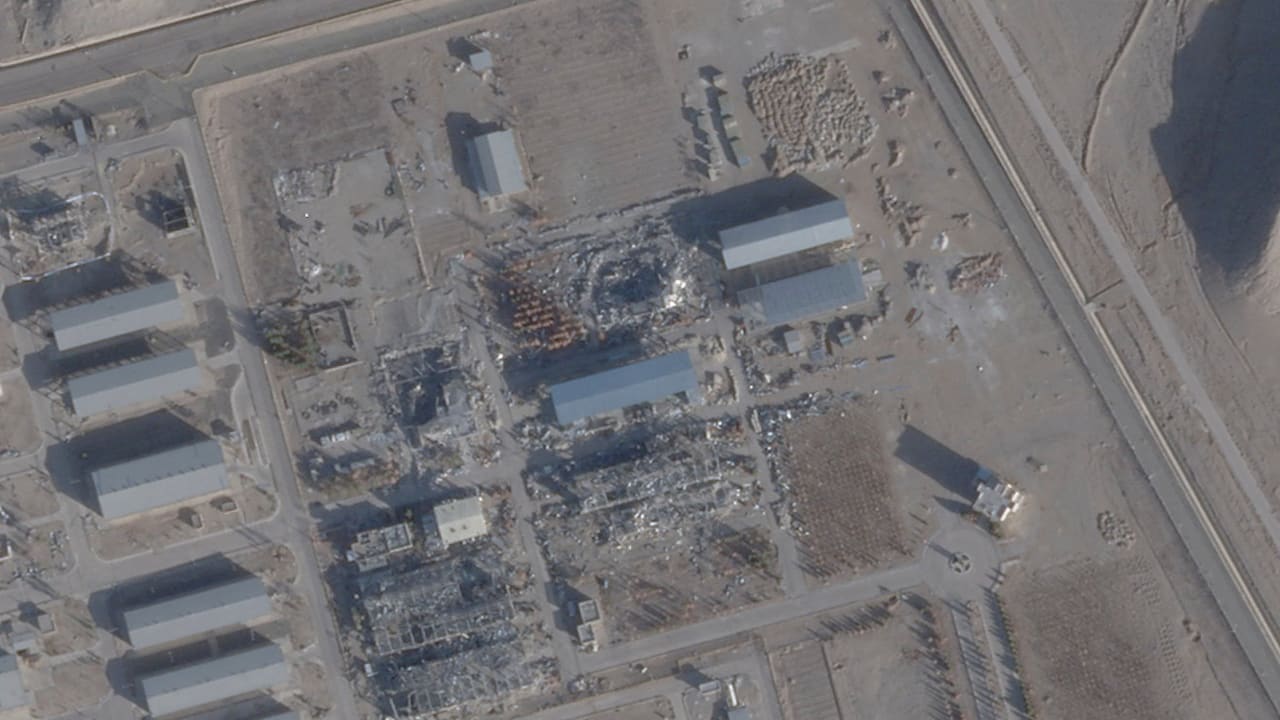
The IDF on Sunday attacked Iran's Aerospace Headquarters for launching satellites, technology which had potential dual use for being incorporated in future attempts to develop nuclear weapons, which could be fired long range into space and hit the US.
The headquarters had been used by the Islamic Revolutionary Guard Corps (IRGC) to promote its aerospace efforts, including the 2022 launch of the Khayyam satellite, successfully launched by Iran using a Russian Soyuz rocket from the Baikonur Cosmodrome in Kazakhstan.
When that satellite was successfully launched into space, it caused serious national security and intelligence concerns for Israel and the West.
Until attacking the site on Sunday, Israeli officials were concerned that the Khayyam and the latest space cooperation between Moscow and Tehran would increase Iran’s capabilities to potentially launch ICBMs (intercontinental ballistic missiles) as well as improve its monitoring of targets in the Jewish state and throughout the region in the short-term.
An additional concern for Jerusalem was that Khayyam and future Russian-Iranian satellites could reduce Israeli spies’ ability to penetrate the Islamic Republic’s border with operations which hold back its nuclear progress.

Israel strikes Iran satellite program site
Earlier in 2022, The Washington Post reported that Russia was preparing to provide Iran with an advanced satellite that would enable it to track potential military targets across the Middle East, sending shudders through much of the region
The Washington Post report had said that the new satellite would allow "continuous monitoring of facilities ranging from Persian Gulf oil refineries and Israeli military bases to Iraqi barracks that house US troops," citing three unnamed sources - a current and a former US official and a senior Middle Eastern government official briefed on the sale.
On December 28, 2025, just before protests in Iran kicked off, leading into the current war, Iran launched three domestically developed satellites into space simultaneously from a Russian launch site just as Prime Minister Benjamin Netanyahu was on his way to meet with US President Donald Trump to discuss the Iranian threat and other regional issues.
Israeli officials interpreted the launches, which were announced multiple times in advance, as a show of the Islamic Republic's defiance of attempts by Jerusalem and Washington to impose a new balance of power on it following the war between the parties in June 2025.
Prior to the June war, Tehran managed numerous satellite launches in recent years, some on its own, and some in conjunction with Moscow.
During that period of time, such satellite launches were often viewed by the Jewish state and by America as a grave danger, due to their being a potential dual-use threat and a move toward producing nuclear weapons, including intercontinental ballistic missiles (ICBMs), which might eventually reach the US.
However, following the June war, Iran's nuclear program was in shambles.
This left the significance of the satellite launches as more of an open question.
There are still three ways, though, that the launches were viewed as threatening to Israel and the US.
The first would be that even if other aspects of Iran's nuclear program were destroyed or frozen, progress for ICBM technology would mean that if the Islamic Republic were to return to make progress in other areas, this aspect of the program might be more advanced and ready.
Second, Iran attacked Israel with three massive barrages of ballistic missiles multiple times since 2024, raising awareness of the extent of its conventional missile threat separate from the nuclear threat.
If it improved its ICBM capabilities, this mass conventional ballistic missile threat might have eventually posed as direct a threat to Washington and Western Europe as it already did to Jerusalem, the Saudis, and Eastern Europe.
Third, some satellites are used for surveillance, and along with Russia, Iran might significantly up its game in being able to spy on Israel and on Israeli military units.
A major advantage which Israel had over Iran until then had been intelligence from its surveillance satellites.
There were concerns that Iran could even the score in that arena,
Vahid Yazdanian, head of the Iranian Space Research Institute and a Deputy Communications and Information Technology Minister at the time, said the three satellites, Paya (Tolu-3), Zafar-2, and the second prototype of Kowsar-1.5, were built by the private sector.
Despite Iranian progress, Israel has been highly successful in achieving surprise against the Islamic regime during the current war, and the latest attacks may remove or heavily delay any potential ICBM in the future, even if the Islamic regime survives the current war.
It was unclear why the site had not been attacked even earlier in the current war efforts









.jpeg)
Comments
Post a Comment