Trump goes further in criticising Israel than any US administration in history
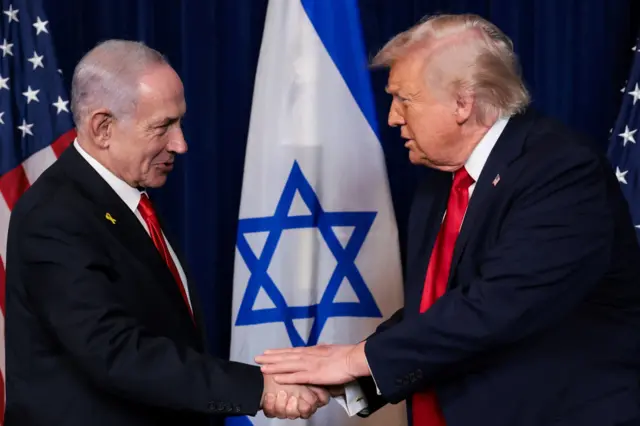
JD Vance's very public criticism of Israeli cabinet ministers today shows the depth of the Trump administration's current displeasure with its key ally.
Trump this week accused Israel of using vastly disproportionate force by killing civilians in Lebanon during Israel’s attacks on the Iran-backed Hezbollah.
Vance told the New York Times that his message for ultranationalist ministers in Israel was "you can't just kill your way out of" national security problems, before telling reporters that Israel was globally isolated and only Trump was backing the country.
All this cumulatively amounts to the sharpest public criticism from any US administration against Israel since its foundation, and signals how angry Trump is that the Israel-Hezbollah conflict could spike his pact with Tehran.
But one further point: In an election year, Trump’s political and economic fate is deeply linked to the survivability of his deal.
Part of this very public row with Netanyahu is also about sending signals to his Gulf Arab allies - and to Tehran - that he is trying to honour the commitment he’s made to a truce in Lebanon.
As with the president's hopes for the war itself, his row with Netanyahu may move to the “rearview mirror”, if and when his Iran deal stabilises.
Meanwhile, in Israel, Olga, who lives in the town of Shlomi near the Lebanon border, says she is "afraid of a disaster".
"I see no advantage in this [deal]. Not to the world and especially not to Israel," she says.
Some Israelis have told Reuters they think their troops need to stay in a buffer zone - also known as the yellow zone - in south Lebanon.
"I'm afraid that the minute the army leaves the yellow zone, we'll be in a very, very quick situation of 7 October all over again," says Noa Rotem, who lives in Kibbutz Matzuva.
Hamas launched an attack on Israel on 7 October 2023. It was the deadliest day in Israel’s history and triggered the deadliest war in Gaza, which has killed 72,742 Palestinians, according to the Hamas-run health ministry.
Meanwhile, Esther Yaakobi, who also lives near the Lebanon border, says the agreement is "in favour of Iran". "Hezbollah does not intend to stop the war and still wants to annihilate us."
"The problem is southern Lebanon," her neighbour Nissim Swissa says. "If they [the Israeli army] withdraw, we're done for."
I've been speaking to residents of Beirut about their reaction to the deal between the US and Iran.
“I felt relief," says Lana, owner of the Halabi Bookshop in the city, when she heard news of the deal.
"But no one trusts that Israel will respect it."
She says during the war, "we have had a lot of loss". There are still "surveillance drones buzzing over our heads and displaced people sleeping in the streets here".
When the war began, her parents had to leave their house in an area which borders the Hezbollah stronghold Dahieh, which has been frequently hit by airstrikes.
"They still don't feel safe to go home."









.jpeg)
Comments
Post a Comment