Posts

Showing posts with the label literature

Igbo Cosmology in Achebe’s Arrow of God

Image
The first important aspects of priestly function in Igbo traditional society, which Achebe exposed in Ezeulu in the first chapter of AG is the priestly role of keeping the community alert to changes in nature. This was demonstrated in Ezeulu’s priestly function as watchman to see and announce the new moon to the community. This duty is so important and ritualized to the extent that even his Obi was built to enable him perform this role without hitches. His Obi was built differently from other men’s huts. There was the usual long threshold in front but also a shorter one on the right as you entered. The eaves on this additional entrance were cut back so that sitting on the floor; Ezeulu could watch that part of the sky where the moon had its door. (319). The people see the approach of the seasons through the moon. This arrangement constitutes one aspects of Ezeulu’s bridging function between the people and their world. He becomes one of the tools which Umuaro uses in its attempts to liv...

APPRECIATING CHUKWUEMEKA IKE'S "OUR CHILDREN ARE COMING"" - Onyeji Nnaji

Image
To appreciate literature is simply to be desolved into the dimensions of narratives carefully contained by a literary piece. The way the reader sees the writer and the conclusion he is able to draw about the author is generally dependent on how much he gets himself assimilated into the narrative dexterity of the author. The writer, who would want readers to gain an immeasurable understanding of the work, uses such language he believes would encourage the reading of his work. But one thing is paramount; he does not place the work so simply for every reader, instead he weaves several techniques into the narrative so that he that approaches the text would see reasons to think. To think properly with any work of art is simply to be absorbed by the same piece of writing. By this, the reader identifies with any character of his choice in the work. With this character, he gains a better position to judge, support or disagree with the philosophy dominant in the text. By so doing, he can vividl...

The prophecy of Chukwuemeka Ike’s “Our Children Are Coming” comes true in the Obidient Movement — Sylva Nze Ifedigbo

Image
In the roll call of authors who have effectively used the novel form to interrogate the systematic abuse of the Nigerian society leading to the many ills her citizens continue to endure today, Chukwuemeka Ike deserves a prolonged applause. In an Obit when he passed at age 88, in 2020, I had noted that “In many ways, his fiction held up a mirror to society, reflecting both the desirable and the worst in us and leaving us with something to really ponder about. He seemed passionate about changing society and used his fiction to consistently remind us of the increasing inadequacies of society which our fleeting sensibilities ignore as we carry on with the daily scramble for material accumulation.” And he had quite a collection of titles that buttressed this including the likes of Toads for Super, The Naked Gods, The Potter’s Wheel, Sunset at Dawn, Expo ’77, The Chicken Chasers, and The Search among others. There will be time to properly study, contextualise and document how young Nigeri...

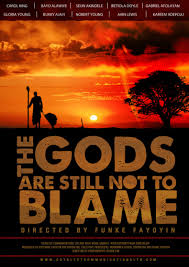
Tales of Hiroism in Ola Rotimi’s The Gods Are not to Blame - Onyeji Nnaji

Image
A part from the dynamics in the setting of Ola Rotimi’s The Gods Are not to Blame and Sophocles’ Oedipus of the King and the mythical pedagogy each evokes in the different traditions it represents, both plays are antonymous via their introductory styles. Sophocles’ play depicts the style Greek scholars refer to as in medias res . This is the narrative technique of beginning an epic or other fictional form by plunging into a crucial situation that is part of a related chain of events; the situation is an extension of previous events and will be developed in later action. Thus, the work begins with an interesting event from the middle of the story, while the supposed beginning is caught through flashback technique. Sophocles’ play opens with the city of Thebes stricken by a plague and its citizens begging Oedipus to find a remedy. He consults the Delphic oracle, which declares that the plague will cease only when the murderer of Jocasta's first husband, King Laius, has b...