North Korea Escalates Ballistic Missile Deliveries to Russia as Productive Capacity Expands Rapidly

North Korea has reportedly resumed shipments of tactical ballistic missiles to equip frontline units in the Russian Armed Forces, marking the latest phase in an expanding military partnership between the two neighbours. These include KN-23 and shorter ranged KN-24 missiles, both of began deliveries to Russia in late 2023. Russia began procurements after its own stocks of precision-guided ballistic missiles came under increasing strain due to hostilities in the Ukrainian theatre. The renewed deliveries demonstrate that North Korea has become one of Russia’s most significant suppliers of precision guided weapons.
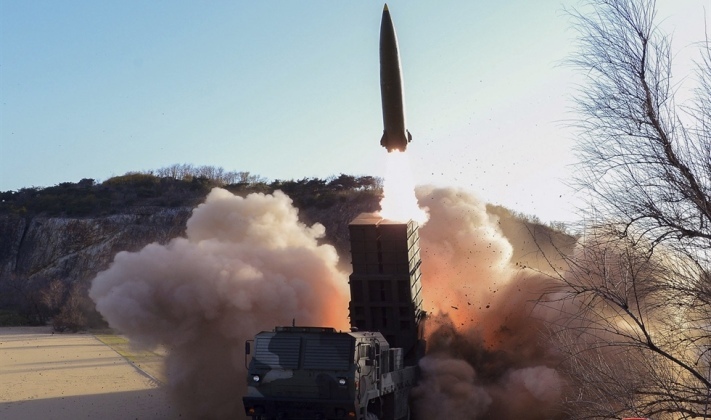
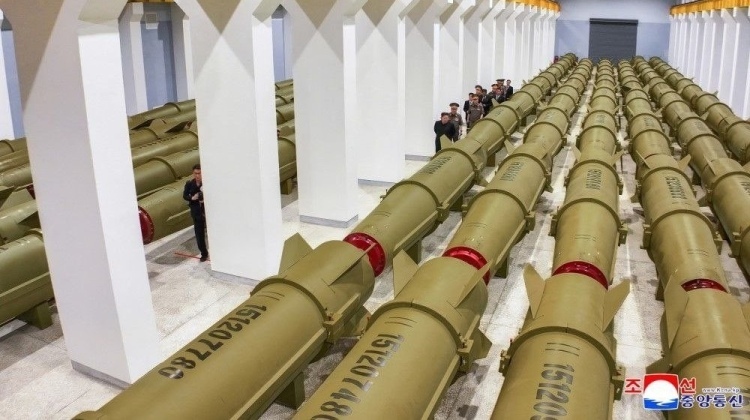
In early June North Korean state media has shown footage of a major facility producing tactical ballistic missiles for the KN-23 system, as the country’s leadership has announced plants for a 2.5 fold expansion in ballistic and cruise missile production capacity over five years. The planned increase in capacity was ordered as North Korea faces both high demand for its missiles abroad, most notably from Russia. North Korea’s missile production scale has had few rivals in the world, with frontline units deployed near the inter-Korean Demilitarised Zone having received 1,000 KN-24 missiles and associated launchers in a single ceremony in August 2024.
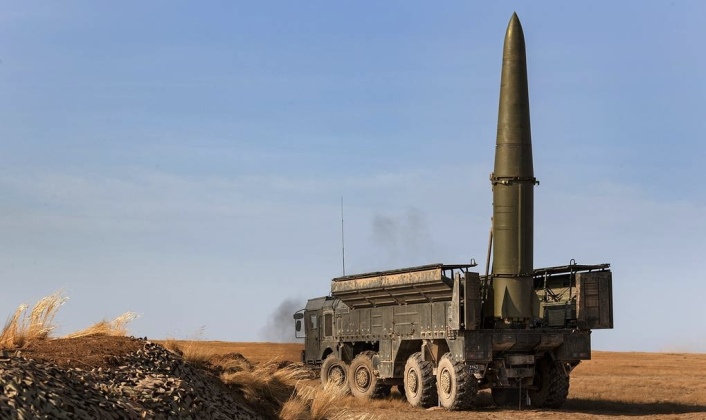
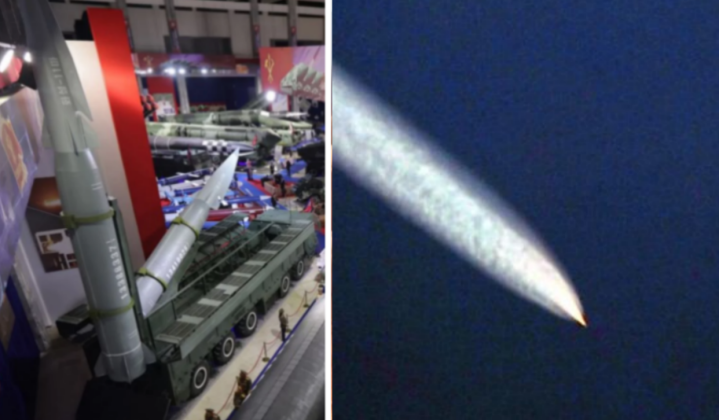
The KN-23 has been used extensively in the Russian-Ukrainian War, as first confirmed in January 2024, supplementing Russia’s domestically developed Iskander-M ballistic missile system. The missile has many significant similarities to the Iskander-M, raising the possibility that its development may have benefitted from technology transfers or other Russian support. The North Korean program is considered more successful, having produced a much wider range of variants, and having seen the missiles deployed from a much more diverse range of launch vehicles.
In June Ukrainian sources reported that the KN-23 had achieved a new improved level of accuracy with a Circular Error Probable of 1–5 meters. Improvements to precision strike capabilities may be the result of both feedback from combat testing and technological advances in North Korea, with funding from exports to Russia having provided a considerable boost to the country’s defence sector. The Russian-Ukrainian War has effectively become the world’s largest live-fire testing environment for North Korean ballistic missiles. Rather than relying solely on domestic testing under controlled conditions, the Korean People’s Army is now able to observe how its missiles perform in a high intensity war zone while gathering valuable data on reliability, accuracy, electronic warfare resistance and terminal performance under real combat conditions.
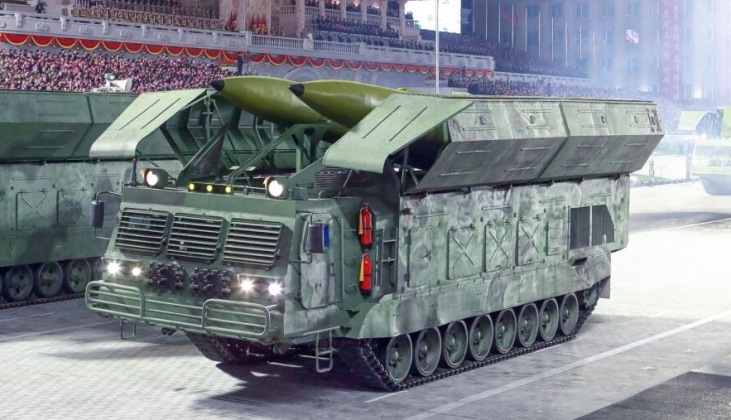
Among the variants of the KN-23 developed, the KN-23B represents a larger variant with an extended range a much enlarged 2,500 kilogram warhead. It was first test fired on March 25, 2021, and due to its larger size used a ten-wheel transporter erector launcher where the original KN-23 used an eight-wheel launcher. The missile’s longer range and larger warhead are thought to have made it highly prized in the Ukrainian theatre. In October 2025 North Korea’s defence sector unveiled a successor to the KN-23, the Hwasong-11Ma, which uses a lift-generating hypersonic glide body and small control surfaces, and appears to be the system of its kind ever to integrate a hypersonic glide vehicle.
In part as a result of the sharp contraction both of Russia’s defence sector and of its ground forces in the aftermath of the Soviet Union’s disintegration, Russian forces have become heavily reliant on procuring defence equipment from North Korea. The results of an investigation by Reuters published in April 2025, for example, highlighted that many Russian artillery units had come to rely almost entirely on ammunition supplied by North Korea, with at least six Russian artillery units sourcing between 50 and 100 percent of their munitions from the country. North Korean armaments are not only in many cases more readily available than their Russian counterparts, but also often have significant performance advantages over their Russian counterparts.









.jpeg)
Comments
Post a Comment